

Whether you run a coffee shop, a juice bar, a catering business or a bubble tea counter, the cup is the first thing your customer sees.
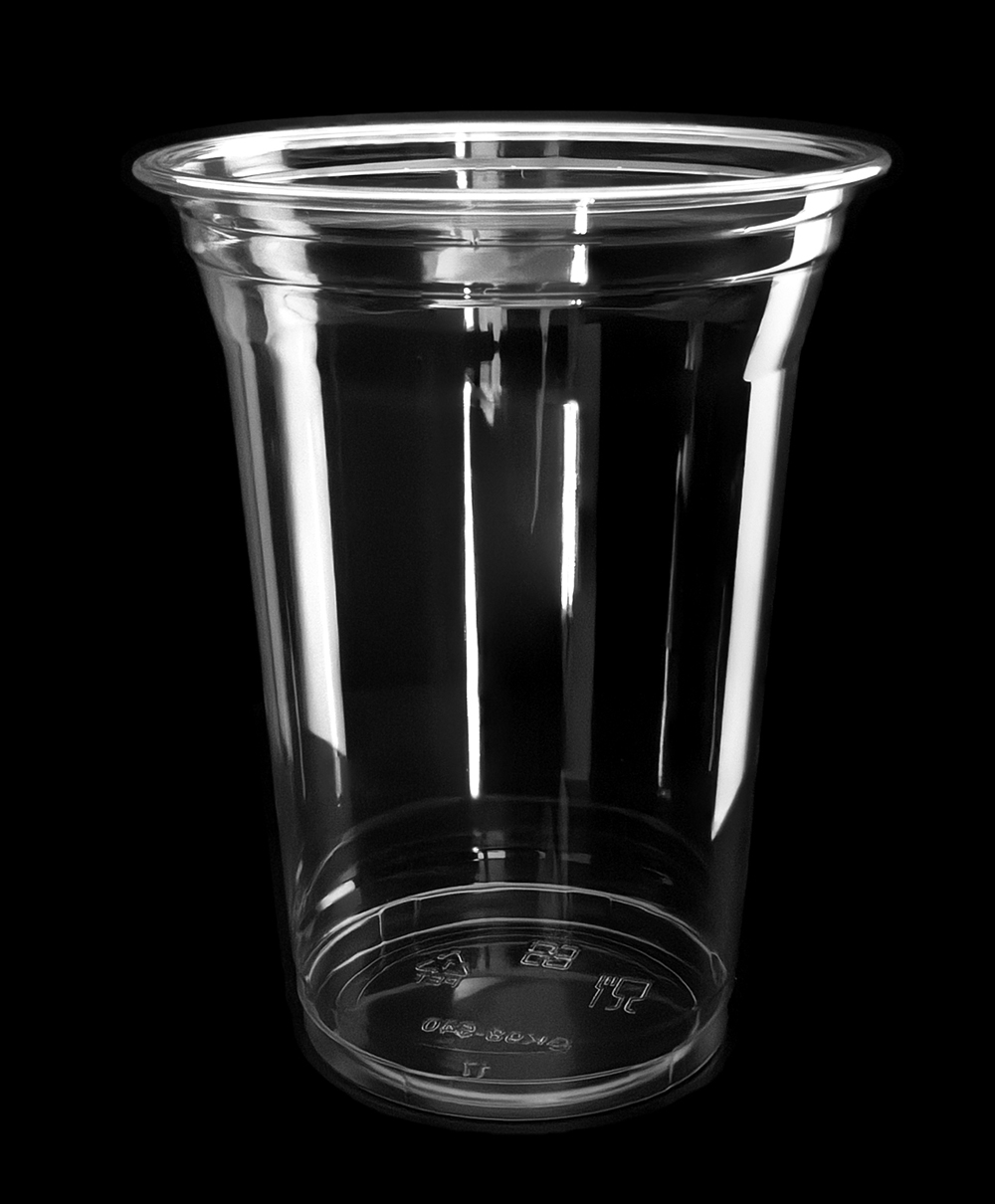
What is a clear PET cold cup?
PET stands for polyethylene terephthalate, the same family of polyester used in water and soda bottles. In cup form, PET is usually thermoformed from extruded sheet. The sheet is heated until pliable, shaped in a mold and trimmed. The result is a rigid, glass-like cup that is much lighter than glass and far less likely to shatter.
Three properties explain why PET dominates cold-drink service:
- Clarity. Layered drinks, cold brew, fruit smoothies and tea with toppings sell partly on how they look. PET shows colour and texture more faithfully than most alternatives, such as polypropylene (PP), which is typically more translucent.
- Rigidity. A PET cup holds its shape in a customer's hand and under a lid, so it is less likely to buckle when squeezed.
- Cold-chain suitability. PET handles refrigerated and iced drinks without becoming brittle in normal food-service conditions.
PET is carried by the resin identification code "1", so it is easy to identify at sorting facilities (see the resin coding standard, ASTM D7611).
GK98/540C technical specifications
The table below reproduces the published data for the GK98/540C from the product page. The right-hand column adds practical notes on how each figure affects your operation.
| Parameter | Published value | Why it matters |
|---|---|---|
| Item No. | GK98/540C | Quote this code on inquiries and purchase orders to avoid mix-ups with the other cups in the range. |
| Capacity | 450 ml (about 15 fl oz) | Check whether this is brim-full or fill-line volume. Ice and lid headspace reduce the drink you can actually serve. |
| Weight | 14.0 g | A rough indicator of wall thickness and material cost. Heavier cups feel sturdier but cost more per unit and per kilo of freight. |
| Caliber (rim diameter) | 98.4 mm | This is the dimension that decides lid fit. Always confirm lid compatibility against the 98 mm rim. |
| Bottom diameter | 60.2 mm | Affects stability and whether the cup sits in standard car cup holders. |
| Height | 124.0 mm | Relevant for dispenser clearance, blender stations and refrigerated display shelves. |
| Pcs per sleeve | 50 pcs × 20 sleeves | Sleeved cups keep the rims clean and are easy to load into dispensers. |
| Qty per carton | 1,000 pcs | Use this to calculate storage space and reorder points. One carton is 20 sleeves of 50. |
A note on naming. The item number reads "GK98/540C", while the product name on the page reads "98/450ml Cup" and the listed capacity is 450 ml. This is a common pattern in the industry where item codes and nominal volumes do not match. When you order, confirm the capacity figure and the item number with the supplier so your purchase order, lids and menu sizing agree.
How PET performs in real service
Clarity and presentation
Clarity is the main reason operators choose PET. In practice, a clear cup works as packaging and as marketing: a layered iced latte or a fruit-and-jelly tea is visible from across the counter, and customers photograph what they can see. Clarity also helps staff, since a quick glance confirms the right drink and the right fill level.
Durability and handling
Compared with brittle clear plastics, PET tolerates the knocks of a busy counter, food truck or event. A cup that cracks when dropped or squeezed becomes a spill and a refund. The product page describes the cup as crack-resistant, and rigid PET is generally well suited to this. Keep in mind that a cup is only one part of a leak-resistant system. Real leak performance also depends on the lid fit, the rim condition and how the lid is applied, so test cup and lid together before standardising.
Temperature limits: the one thing to get right
PET is designed for cold and room-temperature drinks. Its glass transition temperature sits roughly in the 70–80 °C range, so a cup filled with hot coffee or tea will soften and deform. For that reason, clear PET cups are the right choice for iced coffee, cold brew, smoothies, sodas, juices, milkshakes and iced tea. They are the wrong choice for hot beverages, microwave heating or dishwasher reuse. If your menu includes hot drinks, use a separate cup built for them rather than stretching a cold cup beyond its design.
Lids
The manufacturer states that round and flat lids are compatible with this cup. Choose by drink type. Flat lids with a straw slot suit iced coffee and tea. Dome lids leave room for whipped cream or blended toppings. Whichever style you choose, order a sample set and run a quick test: fill with ice and liquid, press the lid on, tip the cup and carry it as a customer would.
Best uses, and uses to avoid
| Application | Suitable? | Notes |
|---|---|---|
| Iced coffee, cold brew, iced lattes | Yes | Clarity shows layers. Use a flat lid with a straw slot. |
| Smoothies, juices, milkshakes | Yes | Use a dome lid for toppings. Check the straw diameter for thick blends. |
| Bubble tea and fruit tea | Yes | Often sealed with film. Confirm the rim suits your sealing machine. |
| Sodas, lemonade, craft soft drinks | Yes | Common at fast-food outlets, stadiums and festivals. |
| Events, catering, picnics | Yes | Light, stackable and easy to dispose of. |
| Hot coffee, hot tea, hot chocolate | No | PET softens at high temperatures. Use a cup designed for hot drinks. |
| Microwave or dishwasher use | No | Designed for single use. |
Recyclability and sustainability: what is true and what needs care
PET is one of the most widely collected and recycled plastics, and the manufacturer positions the cup as a recyclable option. That is a fair description of the material. It does not guarantee that every used cup gets recycled, because that depends on local collection programmes, how cups are sorted and whether they are contaminated with food, sugary residue or mixed with other materials. For up-to-date guidance on PET recycling, see the Association of Plastic Recyclers.
There are practical ways to improve outcomes at the business level:
- Tell customers how to dispose of cups, and give them a clearly labelled recycling bin.
- Match the lid and straw to the cup's material where possible, since mixed materials complicate sorting.
- If your customers or local regulations call for lower-carbon or compostable options, look at the other material families in the same catalogue: the PET Series, RPET Series (recycled PET) and PLA Series (plant-based).
Be careful with environmental claims. If you market your cups as "recyclable", check your local rules on green claims, since some jurisdictions restrict how the term may be used.
Food-contact compliance: what to ask for
Any cup that touches a drink must be made from materials approved for food contact in the market where you sell it. The main reference frameworks are:
- United States: the FDA regulates polyethylene terephthalate polymers for food contact under 21 CFR 177.1630.
- European Union: plastic food-contact materials are governed by Commission Regulation (EU) No 10/2011, which sets migration limits and requires a declaration of compliance.
The product page does not list specific test reports for this cup. Before a first order, ask the supplier for a food-contact declaration and recent migration test reports for your target market, and keep them on file. This is routine for professional buyers, and a reputable manufacturer will expect the request. The company's certifications are summarised on its Certification section.
Buyer's checklist before you order
- Confirm the volume. Ask whether 450 ml is brim-full or fill-line, and compare it with your recipe sizes.
- Match the lid. The rim is 98.4 mm. Order lids and cups together and test them as a pair.
- Check the fit. Make sure the 124 mm height and 60.2 mm base work with your dispensers, sealing machines and cup holders.
- Request documentation. Ask for food-contact compliance documents for your market.
- Request samples. Test with real drinks, ice and lids before committing to volume.
- Plan logistics. At 1,000 pcs per carton (20 sleeves of 50), calculate storage space and reorder points for your busiest week.
- Ask about customisation. If you need printed or sized-to-order cups, ask the supplier about options and minimum quantities.
About the manufacturer
Zhejiang Gaokai New Material Co., Ltd. presents itself as a food container manufacturer working in three material families: PET, PLA and RPET. It is based in Jianshan New District, Haining City, Zhejiang Province, China. The company's website describes its company profile, technology and development path in more detail. The technical equipment and global sales network sections are useful if you are assessing production capacity and export support.
For product questions, samples or quotations, use the Contact Us page. The site states that inquiries receive a reply within 12 working-day hours.
Contact details published on the product page:
Email: petsheet@126.com
Tel: 86-18621117213
Address: No.38, Xianxia Road, Jianshan New District, Haining City, Zhejiang Province, P.R.C.
Frequently asked questions
Can I use clear PET cups for hot drinks?
No. PET softens at relatively low temperatures compared with hot beverages. Use these cups for cold and room-temperature drinks only.
What lids fit the GK98/540C?
The manufacturer states that round and flat lids are compatible. Because the rim diameter is 98.4 mm, confirm the exact lid model with the supplier and test a sample.
How many cups come in a carton?
One carton contains 1,000 cups, packed as 20 sleeves of 50.
Are PET cups recyclable?
PET is a widely recycled material, but whether a used cup is actually recycled depends on local collection and sorting systems, and on how clean the cup is when discarded.
Does the supplier make custom cups?
The company lists PET, PLA and RPET product families. Ask directly through the inquiry form about customisation, minimum order quantities and lead times for your specification.
How quickly will I get a reply to an inquiry?
The website states that replies are sent within 12 hours on working days.


